
Less common UK birds to be seen on Rosefield
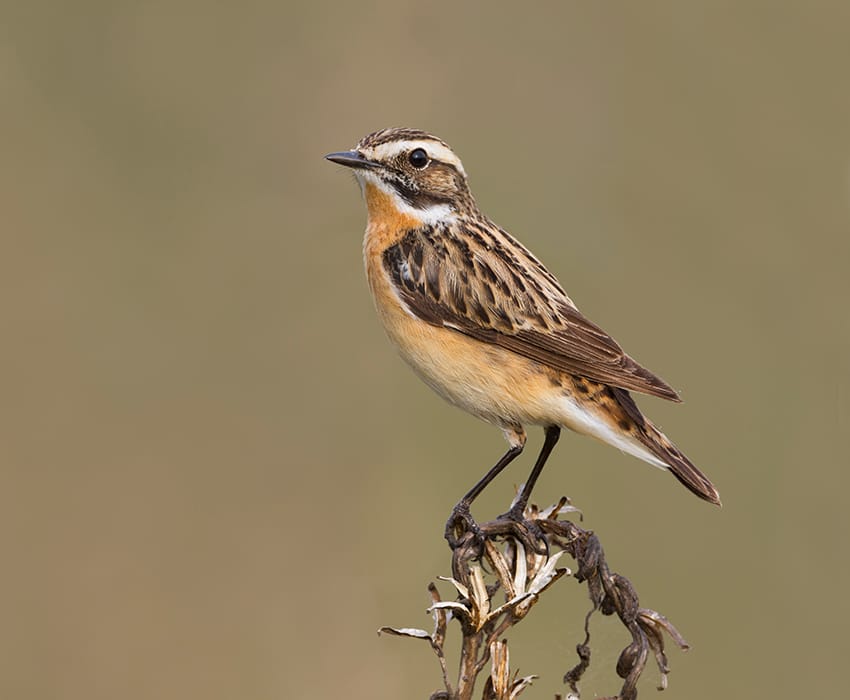
Whinchat
Saxicola Rubetra
Length: 12.5cm, Wingspan: 21-24cm, Weight: 16-24g
Conservation status: Classified in the UK as Red under the Birds of Conservation
When to see: April to October
About: A bird of woodland, upland, farmland, heathland and grassland, the Whinchat, with its dark face and orange breast has its stronghold in the north and west of the UK.
The Whinchat is a summer visitor to Britain and Ireland, arriving during April but leaving a little earlier than most. Birds can be seen at migration watchpoints during August. It is estimated that Wales holds around a third of the UK breeding population. UK Whinchat numbers have fallen steadily since the late-1990s, likely due to habitat degradation.
Whinchats have striking plumage, with a noticeable white eye stripe and orange throat and chest. Males are more strongly coloured than females. The Whinchat spends the winter months in Africa and ringing data reveal several recoveries, with one bird travelling 5,465 km from its Scottish ringing site to Ghana.

Redstart
Length: 14cm, Wingspan: 22cm, Weight: 15g
Average lifespan: 2 years
Conservation status: Classified in the UK as Amber under the Birds of Conservation
Concern 5: the Red List for Birds (2021)
When to see: April to September
About: An elegant, robin-sized Chat, the Redstart is a summer visitor, arriving here in April and leaving in September. It feeds on insects, especially butterfly and beetle larvae, and can be seen foraging in woodlands, hedgerows, parks and beside streams. Redstarts have an upright stance and can be seen 'bobbing': moving in a similar fashion to Robins. They spend most of their time in the trees.
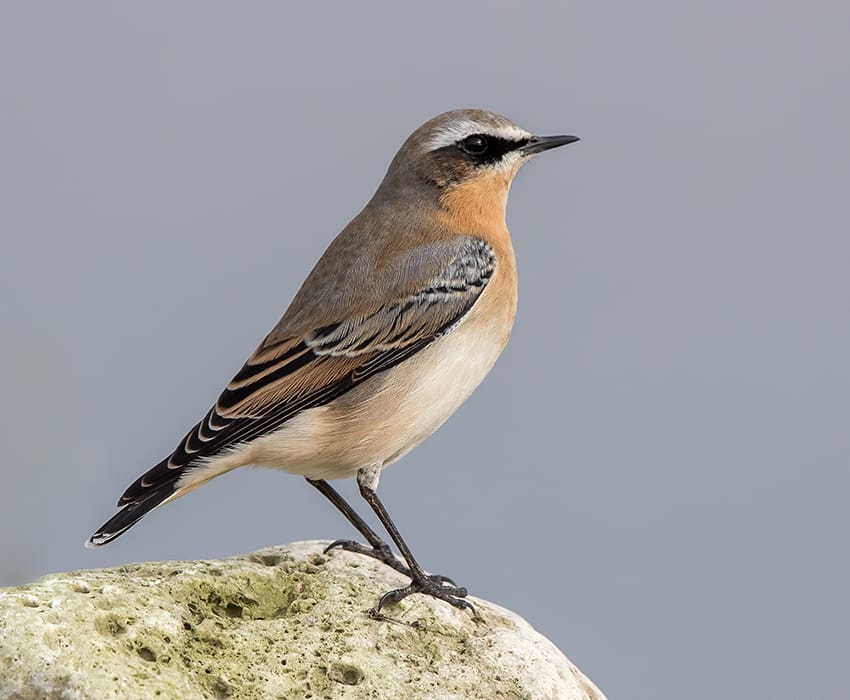
Wheatear
Length: 15-16cm, Wingspan: 29cm, Weight: 24g
Average lifespan: 2 years
Conservation status: Classified in the UK as Amber under the Birds of Conservation
Concern 5: the Red List for Birds (2021). Protected in the UK under the Wildlife and Countryside Act, 1981
When to see: March to October
About: A robin-sized Chat, the Wheatear is a summer visitor, arriving here in early March and leaving in September for its African wintering grounds. It frequents open, rocky country, pasture, moorland and heath. Mainly a ground-dwelling bird, it can be seen running or hopping along. It breeds mainly in western and northern UK.

NIGHTJAR
Length: 26-28cm, Wingspan: 57-64cm, Weight: 65-100g
Conservation status: Classified in the UK as Amber under the Birds of Conservation
Concern 5: the Red List for Birds (2021). Priority Species under the UK Post-2010 Biodiversity Framework
When to see: April to August
About: Mysterious and elusive, the Nightjar is one of our most intriguing birds. A summer visitor with bark-like plumage, it can be incredibly difficult to spot. Occasional visitor found hunting moths in late summer evenings on the edge of woodland / grassland areas.

RAven
Length: 64cm, Wingspan: 1.3m, Weight: 1.1-1.3kg
Average lifespan: 10-15 years
Conservation status: Classified in the UK as Green under the Birds of Conservation
Concern 5: the Red List for Birds (2021).
When to see: January to December
About: The Raven is a massive crow, even bigger than a Buzzard, which can be found on mountains and in forests where it feeds on carrion. The Raven has been expanding its range in recent years, although it is still only found in rural areas. Ravens nest on cliffs around the coast, on mountains, in quarries and in large trees in parkland. Ravens pair for life; males perform breeding displays of posturing, preening and bill caressing from February onwards, and females lay four to six blue-green eggs in a nest of twigs and moss.
The Claydons Solar Action Group are asking for your assistance in helping us make a record of wildlife found in the area for the next year or two