
Wading Birds
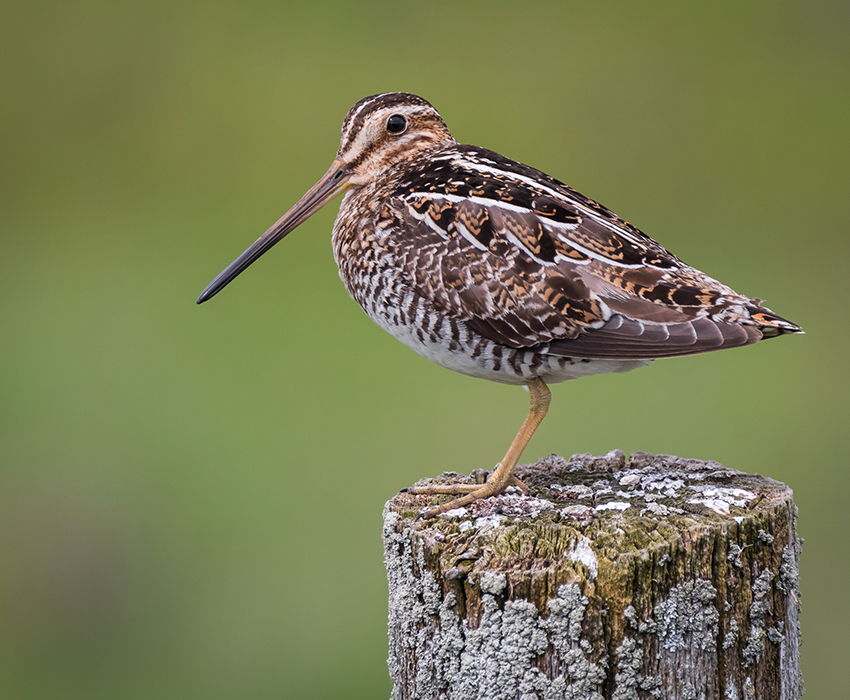
SNIPE
Length: 25-27cm, Wingspan: 46cm, Weight: 110g
Average lifespan: 3 years
Conservation status: Classified in the UK as Amber under the Birds of Conservation Concern 5: the Red List for Birds (2021). Protected in the UK under the Wildlife and Countryside Act, 1981.
When to see: January to December
About: A medium-sized wader, the Snipe lives in marshes, wet grassland and moorlands, where it nests in simple scrapes. It uses its long, probing bill to find insects, earthworms and crustaceans in the mud, typically swallowing prey whole. During the breeding season, males can be heard making a unique 'drumming' sound as their tail feathers vibrate in the wind as they perform their aerial courtship displays.

Jack Snipe
Length: 18cm, Wingspan: 40cm, Weight: 55g
Conservation status: Classified in the UK as Green under the Birds of Conservation Concern 5: the Red List for Birds (2021).
When to see: September to April
About: The Jack Snipe is a small wading bird, similar to the more familiar common snipe. Unlike their common cousins, Jack Snipe are just winter visitors to the UK, spending the summer breeding on waterlogged bogs in northern Europe. Jack Snipe are secretive birds, often hidden in thick vegetation on marshes, wet grassland and in reedbeds. They use their long bill to probe the mud for insects, worms and even plant material, moving in a slight crouch and constantly bouncing up and down as if their legs were made of springs.

Lapwing
Length: 28-31cm, Wingspan: 84cm, Weight: 230g
Average lifespan: 4 years
Conservation status: Classified in the UK as Red under the Birds of Conservation Concern 5: the Red List for Birds (2021). Priority Species under the UK Post-2010 Biodiversity Framework. Listed as Near Threatened on the global IUCN Red List of Threatened Species.
When to see: January to December
About: Familiar birds of farmlands and wetlands, lapwings can often be seen wheeling through winter skies in large, black and white flocks. As spring approaches, these flocks get smaller; some birds head back to their continental breeding grounds and others disperse to breed in the UK. Males put on dramatic aerial displays, tumbling through the air, accompanied by their piercing 'peewit' call, which gives them their other, common name: peewit. Females can be spotted on their nests, which are simple scrapes in the mud or sand. By late spring, cute, fluffy lapwing chicks can be seen venturing out to forage. If the nest is threatened at all, the parents will be attacked or 'mob' the potential predators.

Moorhen
Length: 31-35cm, Wingspan: 52cm, Weight: 320g
Average lifespan: 3 years
Conservation status: Common. Classified in the UK as Amber under the Birds of Conservation Concern 5: the Red List for Birds (2021). Protected in the UK under the Wildlife and Countryside Act, 1981.
When to see: January to December
About: A familiar bird of our wetlands, the moorhen is often seen on park lakes, ponds and rivers. It spends more of its time out of the water than its relative, the coot, and even climbs trees. Moorhens are omnivores, eating everything from snails and insects to small fish and berries. When disturbed, it usually takes cover in nearby vegetation, but if it does take to the air, its flight is short and laboured. The moorhen offers a great opportunity to watch breeding bird behaviour: in the spring, the male swims towards the female with its bill in the water and the two birds eventually nibble at each other's feathers; both birds then build the nest out of twigs in emergent vegetation and defend it with ferocity.

Woodcock
Length: 33-35cm, Wingspan: 58cm, Weight: 280g
Average lifespan: 4 years
Conservation status: Classified in the UK as Red under the Birds of Conservation Concern 5: the Red List for Birds (2021). Protected in the UK under the Wildlife and Countryside Act, 1981.
When to see: January to December
About: A fairly large, short-legged wading bird, the woodcock lives in woodlands and on heathlands where its mottled plumage provides it with excellent camouflage as it probes around the ground for earthworms and beetles to eat. If you happen to disturb one, it will fly off in a zig-zag pattern between the trees before dropping back to the ground and the safe, dense cover of the undergrowth. The woodcocks that breed in the UK are mostly residents, but they are joined by wintering birds from Finland and Russia. In spring and summer, male woodcocks perform a display flight known as roding. At dusk, and just before dawn, they take to the air and patrol over large areas of their forest and heathland homes, calling in a series of grunts and squeaks, competing with other males to attract females.
The Claydons Solar Action Group are asking for your assistance in helping us make a record of wildlife found in the area for the next year or two