
Birds of Prey

Barn Owl
Length: 33-39cm, Wingspan: 89cm, Weight: 300g
Average lifespan: 4 years
Conservation Status: Classified in the UK as Green under the Birds of Conservation
Concern 5: the Red List for Birds (2021). Protected in the UK under the Wildlife and Countryside Act, 1981
When to see: January to December
About: Perhaps our most familiar owl, the Barn Owl will sometimes hunt in the daytime and can be seen 'quartering' over farmland and grassland looking for its next small-mammal meal. However, it is perfectly adapted to hunt with deadly precision in the dark of night: combined with their stealthy and silent flight, their heart-shaped faces direct high-frequency sounds, enabling them to find mice and voles in the vegetation.
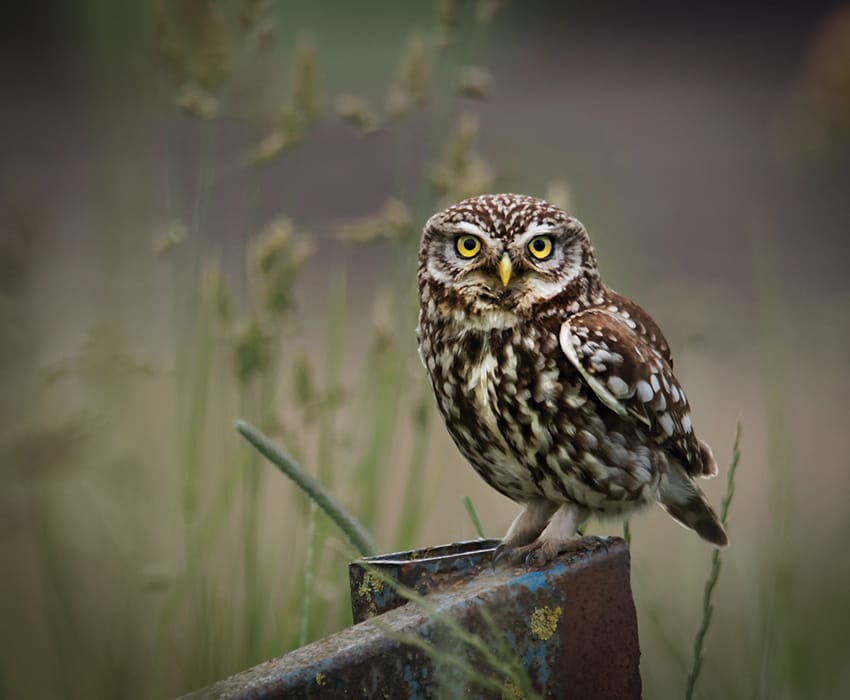
Little Owl
Length: 21-23cm, Wingspan: 56cm, Weight: 180g
Average lifespan: 3 years
Conservation status: Introduced, non-native species
When to see: January to December
About: Although mainly nocturnal, the Little Owl can be spotted in the day hunting invertebrates (especially worms), small mammals, reptiles, amphibians, and small birds. It is often seen perched on a telegraph pole, an old parkland tree, along a hedgerow, or on a rock; from these positions, it quietly scans the ground for prey. When it spots something, it swoops down and catches its victim with either its claws or beak. Little Owls breed between March and August, forming monogamous pairs and nesting in hollow trees.
Locally associated with Claydon House and Florence Nightingale having a pet Little Owl named “Athena”.
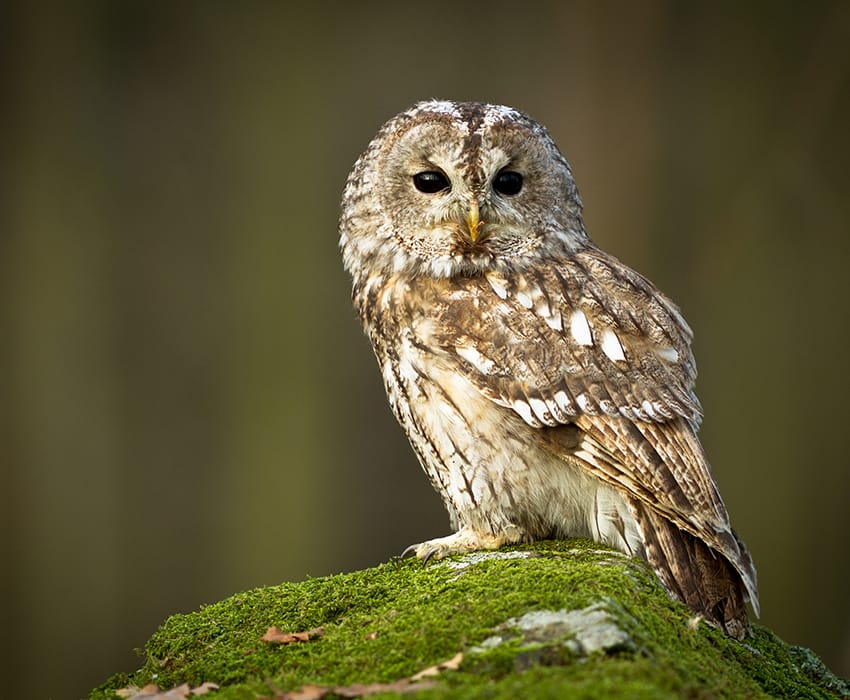
Tawny Owl
Length: 37-39cm, Wingspan: 99cm, Weight: 420-520g
Average lifespan: 4 years
Conservation status: Classified in the UK as Amber under the Birds of Conservation
Concern 5: the Red List for Birds (2021)
When to see: January to December
About: Tawny Owls are our biggest common owl, familiar in Britain’s woodland, parks and gardens. The ‘too-wit too-woo’ call often referred to as being the song of the generic owl, is that of the Tawny Owl. But it isn’t the call of a single bird, but instead made by a male and female calling to each other. The female makes a ‘too-wit’ sound and the male answers with ‘too-woo’! These incredible creatures sit on their favourite perch on the lookout for small animals like voles and mice to eat. They nest during springtime in hollow trees, or sometimes choose to reuse an old crow’s nest!
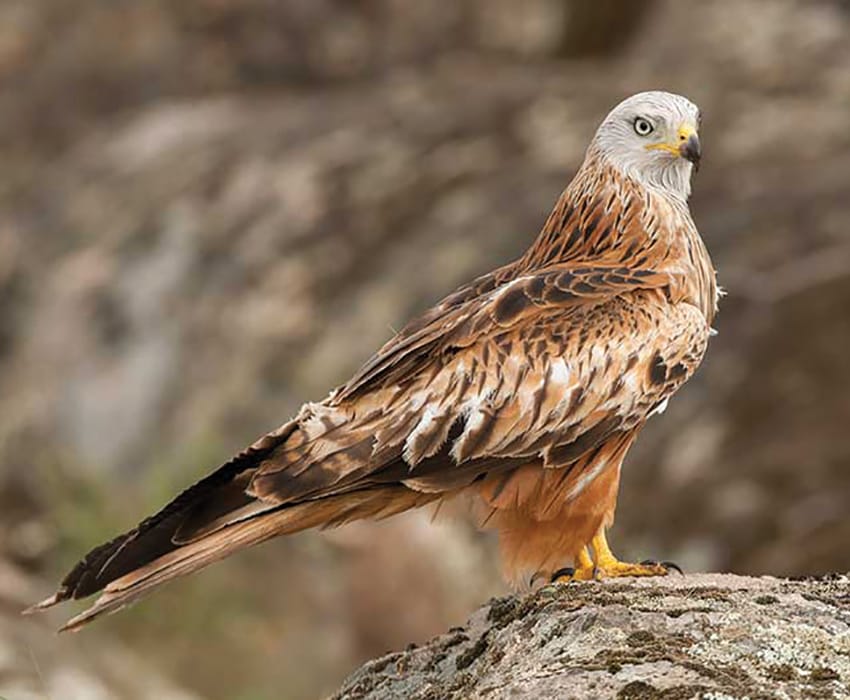
Red Kite
Length: 58-64cm, Wingspan: 1.8m, Weight: 1-1.2kg
Average lifespan: 4 years
Conservation status: Classified in the UK as Green under the Birds of Conservation
Concern 5: the Red List for Birds (2021). Protected in the UK under the Wildlife and Countryside Act, 1981. Listed as Least Concern on the global IUCN Red List of Threatened Species
When to see: January to December
About: Once considered a threat to game birds and domestic animals like cats and dogs, the red kite was hunted close to extinction in the UK. Now a protected species – and following several reintroduction attempts, the number of Red Kites has recovered and they can be spotted in lots of places across the UK. Rather than purely hunting for food, Red Kites are largely scavengers, so they mainly like to eat scraps and small prey like rabbits. Listen out for their ‘mewing’ calls!
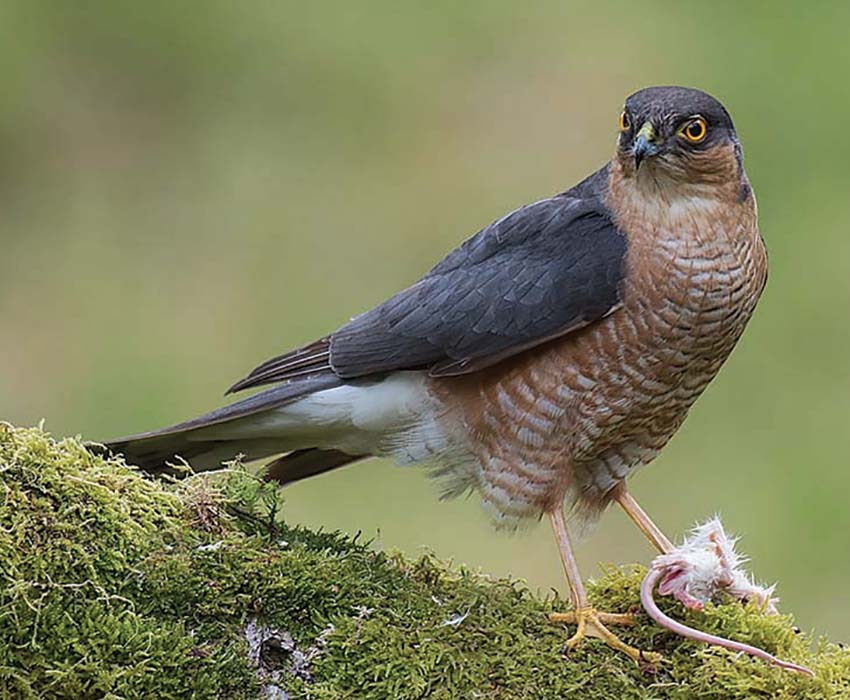
SparrowHawk
Length: 33cm, Wingspan: 62cm, Weight: 150-260g
Average lifespan: 4 years
Conservation status: Classified in the UK as Amber under the Birds of Conservation
Concern 5: the Red List for Birds (2021)
When to see: January to December
About: The Sparrowhawk is one of our smallest birds of prey, the male being somewhere between a Blackbird and a Collared Dove in size. The female is larger, up to the size of a Feral Pigeon. Sparrowhawks are excellent bird hunters, catching small species like Finches, Sparrows and Tits; sometimes they ambush their prey from a perch, while other times they may fly low, suddenly changing direction to fool it.

KESTrel
Length: 33-39cm, Wingspan: 76cm, Weight: 190-220g
Average lifespan: 4 years
Conservation status: Classified in the UK as Amber under the Birds of Conservation
Concern 5: the Red List for Birds (2021)
When to see: January to December
About: The Kestrel is a little larger than a Feral Pigeon and can be found in all kinds of habitats, from open countryside to towns and villages. They nest in holes in trees, old buildings and abandoned Crows' nests, laying between four and five eggs. When they hatch, both parents help to feed the young chicks.
How to identify: Kestrels are typically seen hovering, their pointed wings held out. Males have a grey head and tail with a prominent black band, a gingery-brown back and a creamy underside which is speckled with black. Females are similar, but with a more uniform brown back and dark bands on the tail.

BUZZARD
Length: 54cm, Wingspan: 1.2m, Weight: 780g-1kg
Average lifespan: 12 years
Conservation status: Classified in the UK as Green under the Birds of Conservation
Concern 5: the Red List for Birds (2021).
When to see: January to December
About: Until recently, the Buzzard was only found in the north and west of the country due to severe population declines. Over the last couple of decades, however, it has been doing very well and can now be found almost everywhere in the UK. Listen out for its cat-like,'kee-yaaa' calls as it soars in high circles over grassland, farmland and woodlands. Buzzards eat small birds, mammals and carrion, but will also eat large insects and earthworms when prey is in short supply.
The Claydons Solar Action Group are asking for your assistance in helping us make a record of wildlife found in the area for the next year or two